

The New Talent Frontier: Policy, People & the Workforce Ahead
How are AI and automation reshaping recruiting leadership? Dani Monaghan of Expedia Group explores intelligent leadership, AI adoption, and the future of talent acquisition.
 play_arrow
Building the TA Machine Alessa Rivera Badillo
 play_arrow
The AI Talent Race Alessa Rivera Badillo
 play_arrow
Built for Change: Tracey Friend’s Career Crossroads Alessa Rivera Badillo
 play_arrow
Both Sides of the Table: Why TA Is the Advantage Alessa Rivera Badillo
Featured Guest:
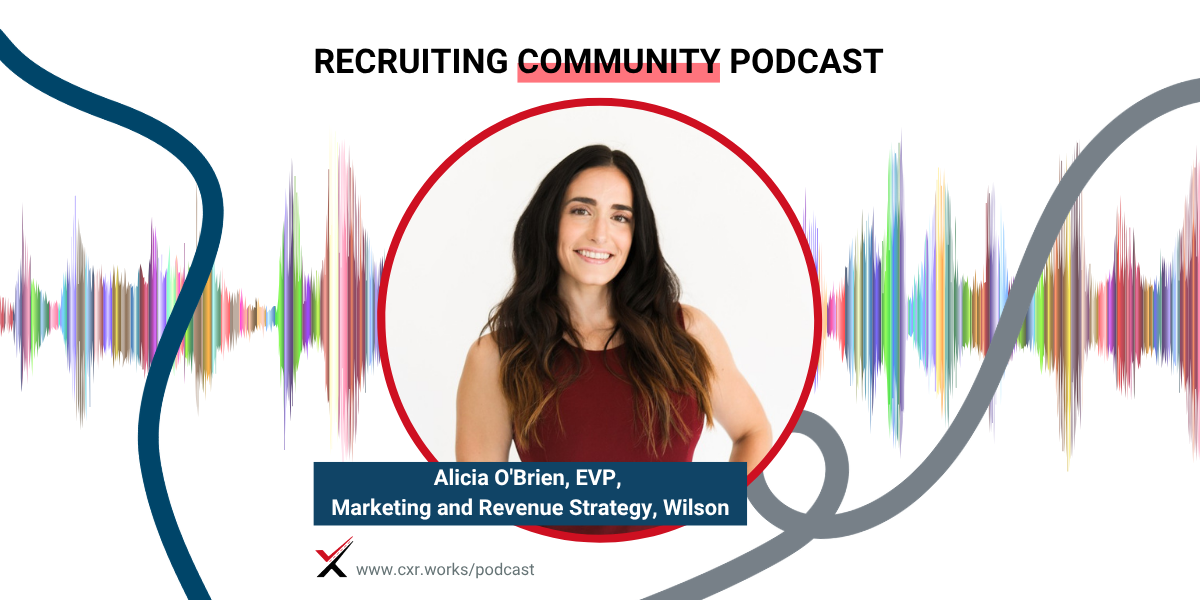
Alicia O’Brien, Marketing and Employer Brand Lead, Wilson
Hosts:
Chris Hoyt, President, CareerXroads
Gerry Crispin, Co-Founder, CareerXroads
Episode Overview
Alicia O’Brien of Wilson joins Chris Hoyt and Gerry Crispin to examine the tension between AI-driven efficiency and authentic employer branding. The conversation covers how organizations can use AI to scale and sharpen their messaging without eroding the distinctiveness and accuracy that make a brand credible — to candidates, to employees, and to the AI systems that now surface that information to researchers.
Key Topics
The shift from search engine visibility to AI-surfaced accuracy as the core employer brand challenge
Why iterating content through AI repeatedly degrades authenticity and drifts from original brand intent
The distinction between differentiating and being distinctive — and why the latter matters more
Using AI to establish a consistent messaging baseline while preserving individual recruiter voice within guardrails
Auditing and A/B testing as tools for measuring whether brand messaging is being applied correctly at scale
Governance as an ongoing function — not a one-time build — and its role in protecting brand integrity
Transparency with candidates about AI involvement at different stages of the hiring process
Generational differences in candidate content preferences and the case for a mixed-format content strategy
Re-skilling and role evolution as employer brand teams absorb governance responsibilities
The CXR Recruiting Awards: recognizing practitioner-led AI innovation in recruiting workflows
Notable Quotes
“Speed doesn’t necessarily create access to the right information. What matters is the accuracy and authenticity of that information — and speed can erode both.”
— Alicia O’Brien
“If we paint a picture of where we truly are and then let the candidate fill in the gap themselves, that’s where we lose authenticity.”
— Alicia O’Brien
“Using AI to shift and change the underlying message itself is where I have some friction.”
— Alicia O’Brien
“Governance has been my word of 2026. There’s so much possibility and so much good that can come out of all of this if it’s executed correctly.”
— Alicia O’Brien
“Whoever has that skill and is paying attention to where it might be needed within an organization is going to find themselves in a very strong position.”
— Alicia O’Brien
“Figure out today what role you play — and really lean into it. That’s how you control your own destiny in terms of where this is going over the next few years.”
— Alicia O’Brien
“If we don’t tell candidates how much AI is involved on our end, why would they hesitate to have AI rewrite their resume or apply on their behalf?”
— Alicia O’Brien
Takeaways
The strongest employer brands using AI aren’t the ones producing the most content — they’re the ones protecting what makes them distinctive while using AI to extend reach and consistency. Governance, transparency with candidates, and ongoing auditing are not optional add-ons; they are what separate brands that scale well from those that quietly lose their voice. For practitioners feeling the pressure of this shift, O’Brien’s advice is direct: define the irreplaceable role of human judgment in your process, and own it.
Want more conversations like this? Subscribe to the CXR podcast and explore how top talent leaders are shaping the future of recruiting. Learn more about the CareerXroads community at cxr.works.
CXR Podcast: How Can Employer Brand Stay Human in the Age of AI
**Guest: Alicia O’Brien**
—
**Chris Hoyt:** Welcome, everybody, to the Recruiting Community podcast. I’m Chris Hoyt, president of CXR. I’m joined by Gerry Crispin, co-founder of CareerXroads.
**Gerry Crispin:** I’m doing really wonderful today.
**Chris Hoyt:** He’s always wonderful. We are the hosts of this podcast, and we like to think we’re bringing you industry insights and updates in the form of a fun conversation — fun for us, at least. This is all brought to you by the CXR CareerXroads community.
The topic we’re going to talk about today is one that has a lot of buzz around it. EB folks are talking about it, candidates are talking about it, leaders are talking about it. AI is helping teams move faster and scale messaging smarter — but we’re going to ask some questions about what happens to authenticity along the way. In this episode, we’ll talk about how leaders can use AI to amplify their employer brand without losing their voice, their authenticity, their values, or the human experience candidates still expect.
A few things first. We are streaming on the socials — YouTube, Facebook, and LinkedIn. You can check us out at cxr.works/podcast, where you’ll find past and future episodes from the 600-plus interviews we’ve done. We interview leaders, practitioners, and people doing really interesting work, much like our guest today. You’ll also find an easy way to like, subscribe, and let us know if you’d like to join the conversation. And a reminder: this is an ad-free labor of love. Nobody paid to be here.
With that said, Gerry and I have a quick promo to share.
**Gerry Crispin:** We do.
**Chris Hoyt:** If you haven’t already heard, we recently launched the CXR Recruiting Awards. You can find them at cxrrecruitingawards.com. As a practitioner, you’ve been building and experimenting with AI — now is the time to show off the work. We want to see what TA teams have done. This is not about what vendors have done for you. We’re looking for what practitioners have done using AI to measurably improve something within a recruiting workflow or function, in any form and at any scale. It could be a single killer prompt. It could be a complete workflow transformation. Nothing is too big or too small.
Gerry, what would be an ideal submission from a TA team?
**Gerry Crispin:** First and foremost, I’m really interested in the person who’s in the trenches — a recruiter trying to get things done who’s figured out how to use AI to integrate a couple of tools, add context to what’s on their dashboard, and save a little time each day. I want to see someone looking at the various parts of a recruiter’s day-to-day journey and finding a mechanism that helps them work more efficiently. It could be about anything — even something like automating part of the background check process when they’ve identified a candidate they want to move forward. It’s the simple stuff that really interests me.
**Chris Hoyt:** We’ve actually already had two submissions come in just a day after launch. One that I’m still wrapping my head around involves an automation workflow where something gets submitted, it triggers a message and a summary that gets pushed through to Slack to remind the team to take action on a candidate.
**Gerry Crispin:** What I’m not looking for, Chris, is someone saying, “Here’s a nice vendor I work with who built this for me at a cost.” I love that those partnerships exist, but I’m interested in the ingenuity of the folks at the bench level.
**Chris Hoyt:** Right. And here’s one that’s almost vendor-adjacent, but I think it qualifies: someone used AI to categorize, summarize, and organize all of their existing content in preparation for a vendor implementation. That work would normally pull an entire TA team away from requisitions and hiring managers for weeks. Instead, they used AI to prep and get ready for the handoff. That’s a great example of something you might not immediately think of, but it absolutely qualifies.
The submission deadline is April 24th. It’s a 15-minute demo video. One key callout: if you have any people data or proprietary information in there, it must be anonymized or fictionalized. All candidate and company data must remain private. We’ll pick three finalists and host them at the Marketplace Live event on June 10th, where we’ll do a VIP dinner and the award presentation. The winner receives a traveling trophy, a ton of recognition, a social media package, and we’ll come out and host dinner for up to 15 people from their team in their market. A lot of great things coming together, and we’re very excited.
**Gerry Crispin:** Very cool.
**Chris Hoyt:** Alright, let’s get into it.
—
*[Podcast intro plays]*
—
**Chris Hoyt:** Alicia, welcome. This is your first time on the show, and we’re excited to have you. Where are you joining us from?
**Alicia O’Brien:** I’m joining you from sunny Tampa, Florida.
**Chris Hoyt:** The weather does not suck.
**Alicia O’Brien:** Not at all — and this time of year is definitely the right time to be here.
**Chris Hoyt:** I was in Scottsdale recently thinking, “Why don’t I live here?” And then I remembered: summer.
**Alicia O’Brien:** Exactly.
**Chris Hoyt:** Alicia, for those who haven’t had the chance to meet you, give us an overview — the elevator pitch. What do you do, where do you work, and how long have you been there?
**Alicia O’Brien:** I work with Wilson, an integrated talent solutions provider. I’ve actually been here for 15 years as of tomorrow — March 27th was my hire date, which is wild to say. I’ve had the opportunity to grow up in recruiting, lead teams, and over the past five to seven years I’ve spent a lot of time on the employer brand and employee experience side of the business. Right now I lead our marketing efforts and oversee our employer brand, which is really fun.
**Chris Hoyt:** We’re definitely in your lane today. And a quick callout: Wilson has been a CXR Solutions Member for going on five years and has consistently contributed expertise and knowledge across a number of our practitioner sessions. As always, nobody paid to be here — but as it happens, Alicia is an expert in this space. Let’s do a premise check right up front. Are you with me?
**Alicia O’Brien:** Absolutely.
**Chris Hoyt:** There’s a lot of enthusiasm around AI accelerating employer brand content — more output, faster turnaround, better scale. But you’ve done work at Wilson that pushes back a little on the idea that faster and more is automatically better. Can you share that premise? Where does that tension live for you?
**Alicia O’Brien:** It’s a really interesting topic. Depending on what area we’re thinking about, I understand and appreciate the need for speed, and AI does create real efficiencies — I don’t want to take away from that. But when we think about what an employer brand is, or frankly what any organization’s brand is, the challenge has shifted. It used to be about how do we show up on the first page of Google search results. Now it’s about what relevant and accurate information is available for AI to consolidate and surface for a researcher. That’s a different problem.
Speed doesn’t necessarily create access to the right information. What matters is the accuracy and authenticity of that information — and speed can erode both. Think about what happens when you ask AI to refine your writing two or three times: you can end up with a completely different message than what you started with. Something similar can happen depending on how a user searches within an LLM. We have to serve the right information for AI to tell the right story. I know that’s a lot, but I’m very passionate about this.
**Chris Hoyt:** And you can tell when someone has just handed off a thought to AI — “here’s what I’m thinking, write me a post” — versus someone who’s used it as a collaborator. “Here’s my thesis, help me structure it.” Or “I’ve written 500 words, help me tighten it up.” That feels like the right way to use it. And it really does resonate when you talk about authenticity, because that word gets used so often in EB that it starts to lose its meaning. So let me ask you directly: how do you define authenticity in the context of candidate experience? And how do you know when AI is quietly murdering it?
**Alicia O’Brien:** I have never been asked that question quite that way before, Chris. Murder and TA — that’s a first.
**Chris Hoyt:** You’ve never had a murder question.
**Alicia O’Brien:** Never. Okay. So if you think about authenticity in the context of what you just said, it comes down to: what is the truth, what do we want a candidate to think, and what’s the gap between those two things? Another way to frame it: who are we, who do we want to be, and what’s the difference? If we paint a picture of where we truly are and then let the candidate fill in the gap themselves, that’s where we lose authenticity.
And that can happen when you put content into an LLM and iterate on it repeatedly. Each pass moves you further from what you started with. The further the output drifts from the original source material, the more authenticity you lose. The goal should be to use AI to bolster and contextualize your story — not to gain efficiency at the expense of meaning.
**Gerry Crispin:** I think about it in terms of balance. We all want to put our best foot forward, but if that’s all we’re doing, we sometimes raise more questions than we answer. If we’re transparent about the challenges, the difficult parts, and the rewarding parts together, we come across as genuinely trying to tell the truth about what someone is in for.
**Alicia O’Brien:** And here’s a practical example. Say there’s an outreach message that was written based on a job description, which was based on the EVP or standard boilerplate. If you refine that message multiple times through AI, the starting point and the ending point should still be fundamentally similar. If there’s a lot of space between what you’re saying in outreach and what your boilerplate says, that’s where — to go back to your word, Chris — you’ve murdered the authenticity. You’ve talked yourself out of what you spent time and money building in the first place. We have to protect that. Going fast and scaling everything through AI isn’t always the right approach.
**Chris Hoyt:** I’ve felt that tension even before AI existed. Pre-AI, it was a copy of a copy of a copy — each iteration drifting a little further. And now it seems like companies that use AI to scale their EB content often end up sounding like a slightly shinier version of their competitor across the street. What’s going wrong? What does scaling without going generic actually require?
**Alicia O’Brien:** I had an epiphany on this yesterday based on something I was listening to. It’s about the difference between differentiating and being *distinct*. We’ve all been using the word “differentiating” for years, but based on what you just described, everyone ends up in the same place — just a different flavor of the same thing, or maybe one bullet point that sounds slightly better than the competitor’s.
Being distinctive is not a synonym for authentic, but they’re very closely aligned. If we can find what’s genuinely distinctive about an organization and use AI to scale and sharpen that message — reach a wider or more targeted audience without watering it down — that’s where we should be spending our time. Using AI to shift and change the underlying message itself is where I have some friction.
**Chris Hoyt:** I love that. Can I put you on the spot a little? Do you have a client example — you don’t have to name them, but you can give them a shout out if you want — of someone who’s done this really well or made a noteworthy pivot in this space?
**Alicia O’Brien:** There’s one example I can point to where we’re walking the line carefully, and it’s working. We’re using AI to make sure everyone’s messaging is cohesive from a consistent baseline. Then we make sure those individuals truly understand what that baseline means — the tone and texture, the core values, whatever the key elements are — and we educate them on what’s important to protect. From there, we give the recruiter room to put their own voice on it, but within that defined context.
The onus is on the recruiter, or the employer brand leader depending on who owns that communication, to do what they will within a guardrail. It’s not about large-scale evangelism — it’s about putting the right tools in the hands of recruiters in a protected way. A couple of years ago, I might have put an employer brand guideline document in front of everyone and let them go, and the messages would’ve varied significantly. Now we’re giving people what they need and teaching them how to use it. In this particular case, that’s made the difference.
**Gerry Crispin:** That raises the question of auditing. You’ve given people more capability individually, you’ve trained them, they have the content and they’re doing their thing — but where does the assessment happen? How do you know people are doing what you intended?
**Alicia O’Brien:** A few ways. There are actual audits of postings, messaging, and conversion rates. And there’s A/B testing — looking at where messaging has become more effective. From a talent community standpoint, that might mean tracking leads being nurtured through the funnel and eventually converting to applicants. We can look at who sent those messages, what role they played, whether they’re the super users and adopters of the ecosystem we’ve built — or whether they’re going rogue. And honestly, you can learn from both. Going rogue isn’t great, but if something’s working, there’s a lesson in it. If it’s not, that’s equally instructive, and you bring it back into what you teach everyone else.
**Chris Hoyt:** I love that. The post-evaluation piece is something that’s always been a struggle at scale, especially in large organizations. You want everyone to take the messaging and run with it, but as a brand leader there’s always anxiety about someone going in the wrong direction, or the timing of a message being off given something happening in the news.
Thinking in builder mode — and I think a lot of recruiters have that mindset now — imagine giving them a custom GPT, a Claude project, a Gem, or whatever tool the organization uses, customized around the brand, loaded with the current guardrails and latest press releases, and they put in what they want to say or post. The tool massages it a little: their tone is preserved, their personality stays intact, but it gets reeled in if it’s out of bounds, or they get some guidance. That seems like a relatively easy way to maintain authenticity at scale.
**Alicia O’Brien:** Exactly. Authenticity is preserved because of the playbook that’s been built for them, and then it’s their voice as a recruiter. Because we all know candidates are going to call the recruiter — in addition to the company or the hiring manager. It allows them to put their own spin on it within that protected environment. And if I’m doing those audits, I can feel confident that my brand is being conveyed correctly by the people sharing it. That’s the holy grail, I’d say.
**Chris Hoyt:** And there have to be people already doing this. You look at the usage dashboards the AI platforms provide, and I feel like that’s a few hours of work to build something like that with basic guardrails. That’s an incremental improvement over where most teams are, it’s not putting anything at big risk, and I think we’re going to see more of those surface.
**Alicia O’Brien:** Absolutely. And I think it’s really important to recognize that alongside builder mode, there’s governance mode and maintenance mode — and those are equally important. As we build these projects and platforms and ecosystems, the ongoing management of them is just as critical as the build itself. That’s another place where authenticity can get lost: you build something, and then it’s forgotten about.
**Chris Hoyt:** The organizational risk is significant if it doesn’t go through the right channels and get proper oversight. Jerry and I were just talking about this yesterday. We’ve seen some interesting tools where it’s clear no governance was applied, and it’s creating real risk for some organizations that I’m not sure they’ve even recognized yet.
**Alicia O’Brien:** They don’t. And that’s why “governance” has been my word of 2026. There’s so much possibility and so much good that can come out of all of this if it’s executed correctly. But governance and ongoing support of these initiatives is crucial. People sometimes forget that.
**Gerry Crispin:** I think we’re going to see some pioneering in how we reorganize or reimagine the structure of TA and HR to handle that. What does a governance function look like — how is it staffed, what tools does it use, and what outcomes is it measuring?
**Alicia O’Brien:** And it connects to the conversation around skills. Re-skilling and up-skilling the workforce is very likely going to be part of how we staff for this. Instead of saying my team has X employer brand specialists and now I need a dedicated governance person, the roles simply shift. The person who has the knowledge transitions into a role that also includes governance and continuous improvement over time. Those things are all interconnected.
**Chris Hoyt:** It’s hard to keep up with, because just as we have that conversation, in six months that specific role might look completely different again given how fast things are moving.
**Alicia O’Brien:** Whoever has that skill and is paying attention to where it might be needed within an organization is going to find themselves in a very strong position.
**Chris Hoyt:** I think brand teams look very, very different 18 months from now.
**Alicia O’Brien:** Very different.
**Chris Hoyt:** Let’s talk about the candidate side. Is there any evidence — anecdotal or otherwise — that candidates can actually tell the difference between an AI-generated experience and a human one? And does it even matter, as long as the experience is still good?
**Alicia O’Brien:** I want to focus on the second part of that question. I think transparency around what is or isn’t AI-assisted improves the candidate experience either way, because it gives the candidate the ability to react based on how they feel about it. If the entire process — including EB messaging — is AI-driven and we say nothing about it, we’re leaving candidates to their own devices to figure out whether what they’re experiencing is real or not.
But if we call it out — if we say this part of the process or this message was AI-assisted — we’re at least giving them a choice about how they want to proceed. As a candidate, I want that transparency. It also sets a standard: if we don’t tell candidates how much AI is involved on our end, why would they hesitate to have AI rewrite their resume or apply on their behalf? We need to set expectations, and then they can react accordingly. Whether it’s “no AI on our end” or “we use it throughout” — tell them, and let them decide.
**Gerry Crispin:** Setting expectations at each stage of the journey is something candidates need and increasingly want. They’re much more accepting of automated tools at the top of the funnel, for example, because they understand the volume — 500 people applied, no human can respond to all of that. But here’s what we can do, and here’s how you can connect with a human.
**Alicia O’Brien:** Exactly. Maybe there’s an asynchronous screening option I can take, but I don’t have to — and here’s why it might actually benefit me. If I work until six and my recruiter works nine to five, and I present better in the evening, I can record myself after work and give myself a better shot. It’s about creating options and positioning them to the candidate as being in their interest.
**Gerry Crispin:** I think that’s excellent if you can do it.
**Chris Hoyt:** You two are talking about the mechanics of the candidate experience, which I completely agree with — disclose it, explain the benefits, allow opt-outs, set expectations. But if we pivot upstream, to branding and marketing, do we have an obligation to disclose what level of our messaging and branding was AI-assisted before someone even clicks “Apply”? Or is that just marketing? We might just as easily have used an ambitious intern, and we don’t disclose that.
**Alicia O’Brien:** The way I look at it: sharing that information so someone can react to it is better than not sharing it. It still puts the decision back on the candidate. If they realize that outreach was generated by AI rather than by a recruiter — or that it came from the CRM — maybe there’s a small asterisk somewhere that acknowledges that in a natural way and offers them a different path if they want it. It’s about giving them choices.
**Chris Hoyt:** And I’m not sure I personally care as a candidate at that stage. It’s marketing. I’m probably going to assume it was AI-generated anyway.
**Gerry Crispin:** It also depends on whether the employer has a reason to care. They may have data specific to certain roles — more instances of fraud or candidate behavior they’re uncomfortable with — where they feel it’s important to set expectations clearly upfront.
**Alicia O’Brien:** And from a pure brand lens, think about the type of content we respond to organically. If I see an employee holding up their phone on LinkedIn saying, “Here’s a little bit about my day,” that’s compelling. AI can help employees document their experiences and make that content more accessible — on the company website or otherwise. That’s fine. But would a candidate want a fake experience to have generated that content? That’s probably where I’d draw the line.
**Chris Hoyt:** I love this discussion. We did a walkthrough recently with about 17 companies in a room, talking about where AI involvement was acceptable in the candidate’s process. Does anyone care if a candidate used AI to clean up their LinkedIn profile? No. Does anyone care if they used AI to polish their resume, as long as it’s still factual? No.
And here’s what’s fascinating to me, Alicia: if you’re documenting day-in-the-life content as an employee, and I can use AI to replicate that factually — not glamorize it, just accurately represent what the workplace looks like using an AI persona — when that employee leaves or moves on, I don’t have to pull down all my marketing materials. I own the rights to those representations, and it’s still a factual portrayal of what goes on in the organization. That’s part of why I think this world looks completely different in 18 months. But we are going to have to navigate what’s authentic — and I think we should disclose when it’s an AI portrayal of an actual employee experience.
**Alicia O’Brien:** And the other thing I think about is giving options based on the generational workforce. Depending on where someone is in their career, they’re going to respond to very different types of content. From a pure marketing standpoint, we need to produce content that reaches each type of candidate or visitor — wherever they are. Maybe we need some of me walking through my day, some of what you’re describing with an AI-driven representation, and some written content for people who prefer that. At the end of the day, we have to consider who the audience is, what’s important to them, and let that lead. In some ways, that’s more natural.
**Chris Hoyt:** And you made a great point about post-evaluation. Smart teams are going to do a lot of A/B testing. The evaluation of what resonates will probably vary by candidate type, function, or level — and that data will drive what we can synthesize versus what needs to stay more human and closely controlled.
**Gerry Crispin:** Fascinating.
**Chris Hoyt:** If there’s a leader listening right now who’s in the middle of rolling out AI tools for their EB work and is worried they’re already trading some soul for efficiency — what’s one thing you’d tell them to do differently, starting today or tomorrow?
**Alicia O’Brien:** I would say: truly determine what role you want human workers to play. And I’ll go back to that word — governance. We’re rolling out technology, we want to show ROI and demonstrate improvement, but “better” means different things to different organizations. If we can articulate the specific benefit of human interaction, study the data, and keep making sure it’s driving the results we want — that’s where the focus should be.
It could feel like, “I’m worried about my job. My team is worried about what’s going to happen in the next five years.” But take control of the situation. Figure out today what role you play — and really lean into it. That’s how you control your own destiny in terms of where this is going over the next few years.
**Chris Hoyt:** No murdering.
**Alicia O’Brien:** No murdering. We’re essentially a murder-free podcast.
**Chris Hoyt:** I would watch that show, though. “TA Murder.”
**Alicia O’Brien:** Yeah.
**Chris Hoyt:** Alicia, we ask everyone on the show before we let them go: if you were going to write a book — about this topic, your headspace, where you’re at right now — what would the title be?
**Alicia O’Brien:** Thinking about my experience over the last 15-plus years at Wilson and in this industry, I could fill a book with stories. And if you’re a TA practitioner, you already know there’s going to be something in there worth reading — because we all have those stories. So I’d just call it: *My Stories as a TA Practitioner* — and if you know, you know.
**Chris Hoyt:** What I heard is: when you write this book, you’re going to want to buy it — because you already know the stories are going to be wild.
**Alicia O’Brien:** Exactly. Just which way? Murder? Who knows?
**Chris Hoyt:** We all have those stories you can only tell when no one’s recording. So I would absolutely buy your book.
**Alicia O’Brien:** I’ll let you know when it’s coming out — it’ll have some good stuff in it.
**Chris Hoyt:** Please do. And last question: present company excluded — who gets the first signed copy?
**Alicia O’Brien:** I have to give it to John. John Wilson. I don’t know that I’d be where I am without him and Cher — so there you go.
**Chris Hoyt:** He’s a great guy. We really enjoy him. Alicia, thank you so much — we know you’re incredibly busy, and we genuinely appreciate your insight and your time. A couple of things from this conversation are going to be spinning around in my head all day.
**Alicia O’Brien:** Thank you both for having me. It’s been a real pleasure. Thanks, Jerry and Chris.
**Chris Hoyt:** We’ll remind everybody: cxrrecruitingawards.com. You’ve got a couple of weeks to get those submissions in. No AI work is too small or too large. Anonymize your data, check out the website, and get your entry in. This is about recognition for practitioners who are making a real difference. Until next week — find us at cxr.works/podcast. Thanks, everybody.
How are AI and automation reshaping recruiting leadership? Dani Monaghan of Expedia Group explores intelligent leadership, AI adoption, and the future of talent acquisition.