Proving TA’s Value: Sourcing’s Role in Revenue Growth
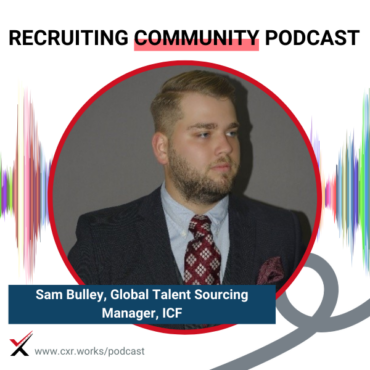
How is AI changing sourcing without replacing sourcers? Sam Bulley of ICF explains how his team is evolving with tech—and why adaptability is everything.
 play_arrow
Empathy, AI, and the Business of People Alessa Rivera Badillo
 play_arrow
Building the TA Machine Alessa Rivera Badillo
 play_arrow
The AI Talent Race Alessa Rivera Badillo
 play_arrow
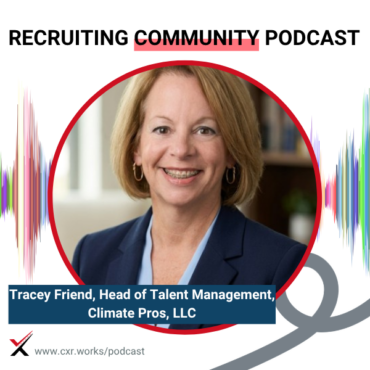
Built for Change: Tracey Friend’s Career Crossroads Alessa Rivera Badillo

Featured Guests:
Shelia Gray, Global Head of TA, Hyundai Motor Company
Hosts:
Chris Hoyt, President, CXR
Gerry Crispin, Co-founder, Career Crossroads
Episode Overview:
Shelia Gray joins Chris Hoyt and Gerry Crispin to discuss the realities of leading global talent acquisition. Drawing on her experience building and transforming recruiting functions across regions, Shelia shares insights on balancing global consistency with local flexibility, building trust without direct authority, and navigating cultural and historical nuances. The conversation explores how influence, credibility, and change management shape successful global recruiting strategies.
Key Topics:
The complexity of global recruiting and why it is not “broken”
Balancing global standards with regional flexibility
The concept of “glocal” recruiting
Cultural differences in hiring practices and diversity definitions
Global executive hiring models and guiding principles
Building influence without direct authority
Establishing trust across borders
Change management in global talent acquisition
Handling conflict, accountability, and team alignment
The role of in-person connection in global leadership
Notable Quotes:
“You take your values, but you can’t take your expectations with you.”
“It’s not broken. It’s complex.”
“Very few policies truly need to be global.”
“Trust is easily given, but once broken, it’s hard to rebuild.”
“I believe the X is on me.”
“Conflict and confrontation aren’t the same thing.”
“Walk by faith, not by sight.”
Takeaways:
Global recruiting requires clarity on foundational principles while allowing flexibility in local execution. Trust, cultural awareness, and relationship-building are critical when leading across borders—especially without direct authority. Leaders who align to business goals, respect regional context, and take accountability create the conditions for sustainable global success.
Want more conversations like this?
Subscribe to the CXR podcast and explore how top talent leaders are shaping the future of recruiting. Learn more about the CareerXroads community at cxr.works.
Chris Hoyt: Welcome, everybody, to the Recruiting Community Podcast. I’m Chris Hoyt, President of CXR. I’m here with Gerry Crispin, Co-founder of Career Crossroads, and we’re your hosts. We like to think this podcast brings you industry insights and updates in the form of a fun conversation, all brought to you by the CXR Career Crossroads recruiting community.
I’m excited to tell you that Hyundai’s Shelia Gray is joining us today for a candid look at why global recruiting can feel like a maze—and why that doesn’t necessarily mean it’s broken. We’re going to talk about the push and pull between global and regional needs, and the power of influence when you’ve got limited control. Anyone who’s been in a global role knows how challenging that can be, because markets operate very differently. We’ll also talk about how leaders build credibility across borders.
Before we jump in with Shelia, a quick reminder: we stream on YouTube, Facebook, and LinkedIn. Be sure to check out cxr.org/podcast. You can see past and future episodes there—hundreds of interviews with TA leaders and practitioners doing really interesting work, much like our guest today. You’ll also find easy ways to like, subscribe, and even let us know if you’d like to join the conversation.
And one last thing—it’s an ad-free labor of love. Nobody paid to be here today. Right, Gerry?
Gerry Crispin: I’m amazed at how smoothly you get through that.
Chris Hoyt: That’s 500 episodes for you, Gerry.
Gerry Crispin: You’ve had practice, is that what you’re saying?
Chris Hoyt: Once or twice.
Announcer: Welcome to the Recruiting Community Podcast, the go-to channel for talent acquisition leaders and practitioners. This show is brought to you by CXR, a trusted community of thousands connecting the best minds in the industry to explore topics like attracting, engaging, and retaining top talent. Hosted by Chris Hoyt and Gerry Crispin, we’re thrilled to have you join the conversation.
Chris Hoyt: Shelia, welcome. Welcome back, actually, because you’ve been on before.
Shelia Gray: I was looking at my calendar—the last time we talked was at Unleash last year. You did a podcast on the spot, and we talked about where we thought the future was going. We’re still here, so the future didn’t materialize the way we thought.
Chris Hoyt: We’re still here. For those who haven’t met you yet, or maybe didn’t catch our chat at Unleash, can you give us the escalator pitch? Who is Shelia, and what’s she bringing to the table today?
Shelia Gray: I’m Shelia Gray. I live in Cary, North Carolina, right outside Raleigh. I work remotely for Hyundai. I started my new job last November, so I’m building something new.
My background has been in talent acquisition for most of my career. I started in HR, spent time in diversity when diversity was fun, and have spent the last 20 years in TA working with global companies—either building centers of excellence, centralizing recruiting, or outsourcing recruiting.
I love change management. I love the complexity. I love having teams in all regions of the world and learning about their labor forces and labor changes. I consider myself a problem solver.
A couple of years ago, you asked who defines us, and I said my persona is Jack Bauer from 24—I can get a lot done in a day. And I have the optimism of Harvey Specter from Suits. If there’s not a door, break down the wall and go through it.
Chris Hoyt: We could talk TV all day, but let’s get into it. A lot of leaders say when they step into a global role—or when their role becomes global—it feels like hacking their way through a maze. This isn’t your first global role. You’re a change agent. What do people underestimate about making global recruiting actually work across regions?
Shelia Gray: I find that some TA people get intimidated by global work. To me, global work is like traveling internationally. You take your values, but you can’t take your expectations with you.
If you’re trying to assimilate regions into your paradigm—into how corporate does it—that’s where the struggle begins. That’s the hurdle. Instead, you meet people where they are.
When I go to a different country, the first thing I notice is whether people queue up. I’m used to lines and personal space. That’s common in Europe. It’s not the same everywhere. I shouldn’t be offended if someone steps in front of me. I have to adjust my expectations.
The same is true with recruiting. When I get a global job, I first figure out the business strategy. What are they trying to accomplish? Am I there to centralize, decentralize, expand into new regions? I start with the end goal in mind.
I don’t walk in thinking I want to own all the recruiters or that one model fits all. I want a win-win situation. Sometimes it becomes win-lose—especially if there’s cleanup work to do—but I walk in expecting to learn from them, not just teach them.
It’s not broken. It’s complex.
Gerry Crispin: It’s also culturally different. Culture dictates how businesses operate and how people do their jobs. Even something like an ATS may be built around one culture and not fit another.
Shelia Gray: Absolutely. Take diversity. Outside the U.S., diversity often means gender—not race or ethnicity. In the U.S., we track everything. In Germany, after the Holocaust, many people didn’t want to identify their ethnicity. There are historical reasons for that.
We can still pursue the same outcomes—more diverse talent pools—without imposing our tracking expectations. Everyone has a frame of reference you may not be aware of.
Chris Hoyt: There was a term years ago—“glocal.” Global and local combined. How do you decide what should be globally consistent versus what should flex locally?
Shelia Gray: I believe in working across borders and boundaries. Very few policies truly need to be global.
Employee referral is one. Internal mobility is another. Technology falls into my scope—but how we get to the solution involves the regions. They tell me the problem; I help find the solution. They get a voice and a vote.
Most other things are negotiable—definition of an applicant, offer letters versus work contracts, data privacy nuances.
It’s like faith versus tradition. Some things are foundational; others are just practices we’ve gotten used to. We need to know the difference.
For example, I worked on a global executive hiring model. The organization wanted one consistent process worldwide—same panel structure, same number of interviews. I asked: Are the teams the same size? Are managers equally prepared to make decisions?
We landed on guiding principles instead of a rigid model. Ensure a consistent executive assessment process. Ensure the right decision-makers are involved. Ensure candidate experience is valued. One decision-maker at the end.
How regions structure interviews beyond that? That’s flexible.
The only time I play police is when it’s legally required.
Chris Hoyt: In a global structure, you don’t always have direct authority. What earns influence?
Shelia Gray: Respect and trust. Trust is easily given, but once broken, it’s hard to rebuild.
I demonstrate that I’m there to help, not distract. I start with their goals. What are they being measured on? How do I align TA to support that?
And yes, I show up. I’ve broken bread in many countries. I’ve been in places where I didn’t speak the language. I’ve arrived early, spent weekends with teams before Monday meetings—on my own time and expense.
One trip builds trust that 10–15 conference calls never will.
I also bring gifts. The first time I went to China, my team met me with a necklace and took me to dinner. I felt the hospitality. Now I make sure I extend that same courtesy.
That builds trust.
Chris Hoyt: Trust is earned in drops and lost in buckets. Is there a mistake leaders should avoid?
Shelia Gray: Being authoritarian.
I’m part of HR. I respect what they do and ask them to respect what I do. We present a united front. If there’s an issue, we handle it offline before we meet with the business.
If you sit on the other side of the table criticizing our function in front of the client, that breaks trust.
In my early days, I might have thrown someone under the bus. Now, I apologize for experiences—even if the action wasn’t wrong. It costs nothing to say, “I’m sorry you had that experience. How do we move forward?”
I believe the X is on me. If my team messes up, it’s on me. I’ll take the heat publicly. Behind the scenes, we talk about root causes—not band-aids.
Conflict and confrontation aren’t the same thing. You own the outcome of confrontation. Put the moose on the table. Talk about it once, resolve it, and move on.
Chris Hoyt: We like to end with this question: If you were going to write a book about this topic, what would the title be?
Shelia Gray: Walk by Faith, Not by Sight.
In the work I do, I have to be a visionary. Sometimes I walk into a situation where the house is gutted—teams laid off, morale low. Other times, the house hasn’t been built yet.
I have to visualize what it will look like finished and take people on the journey. At a construction site, you start with the foundation. It takes time before you see the full vision.
So it’s walk by faith—not by sight.
Chris Hoyt: Shelia, thank you. We know you’re busy in your new role, and we appreciate you taking the time.
Shelia Gray: You’re part of my family. You brought me into a bigger recruitment community that’s very supportive. I love the CXR community.
Chris Hoyt: That means a lot. Thanks so much. And to everyone listening, visit cxr.org/podcast. Like, subscribe, and join the conversation.
Announcer: Thanks for listening to the Recruiting Community Podcast, where talent acquisition leaders connect, learn, and grow together. Visit cxr.org/podcast to explore past episodes, see what’s coming up next, and find out how you can join the conversation. We’ll catch you in the next episode.
How is AI changing sourcing without replacing sourcers? Sam Bulley of ICF explains how his team is evolving with tech—and why adaptability is everything.