
Empathy, AI, and the Business of People
Can empathy and AI coexist in TA? Quest Diagnostics’ John O’Leary shares how business fluency and people-first leadership drive recruiting results.
 play_arrow
Recruiting Authenticity Research Report Nicole Gould
 play_arrow
Empathy, AI, and the Business of People Alessa Rivera Badillo
 play_arrow
Building the TA Machine Alessa Rivera Badillo
 play_arrow
The AI Talent Race Alessa Rivera Badillo
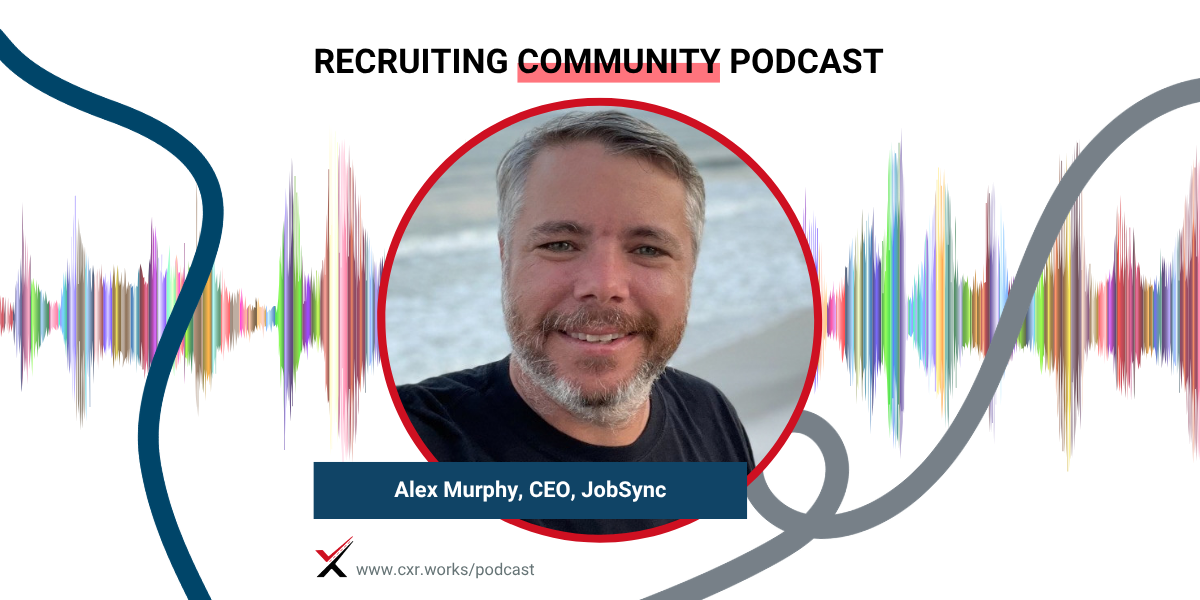
In this episode, Chris Hoyt and Alex Murphy discuss the research behind the CXR report Recruiting’s Authenticity Problem. Chris explains that the report comes from a five-week research panel of talent leaders in the CXR community, who discussed what candidate fraud looks like now, how they detect it, and how AI has changed it.
The conversation covers the terminology used for the problem, where fraud appears in the hiring process, how fake job postings and AI-written applications contribute, the limits of detection tools, and who should own fraud prevention. Murphy also shares steps TA teams can take, starting with data and quantifying risk.
Key Topics:
Notable Quotes:
“It’s actually just fraud in hiring.” — Alex Murphy
“I didn’t know that the purple squirrel existed.” — Alex Murphy
“Most people don’t realize it’s affecting them.” — Alex Murphy
“You have to trust in what you’ve got in order to build confidence.” — Alex Murphy
“Some of it’s human and some of it’s technology, and you need to use both.” — Alex Murphy
Takeaways:
Murphy says fraud in hiring reflects a broader loss of trust among candidates, recruiters, and employers. He says visual and conversational screening tactics can be easily overcome, so the most practical approach combines technology with human judgment. He recommends that TA teams start by defining the problem, collecting data, and working with the CFO and controller to quantify the risk.
Want more conversations like this?
Subscribe to the CXR podcast and explore how top talent leaders are shaping the future of recruiting. Learn more about the CareerXroads community at cxr.works.
Chris Hoyt:
All right, welcome everybody the Recruiting Community Podcast. My name is Chris Hoyt. I am the president of Career Crossroads. I’m your host today for our show. We welcome back to you. just coming in to sit down. And I I think the way we like to phrase this is we do our best to bring you kind of industry insights and updates in the form of a fun conversation. of course, all brought to you by the CXR Career Crossroads community. what’s really interesting, I think, over the over the past year, Jerry and Barb and I have heard.
We think the same thing from TA leaders over and over. they know that candidate fraud is real, but they’re not really sure how much of it is hitting them or their organizations or whether they would even catch it if it were. So we put together a research panel and over about five weeks, talent leaders from across the the CXR community talk through what fraud looks like now, how they’re actually detecting it, and what AI has changed and and actually what
what they’re doing about it or what they plan to be doing about it. And that work became the engine for our new report that we’re calling Recruiting’s Authenticity Problem. My guest today helped run those sessions with me as a co-facilitator and as of course also a CXR community member. Alex Murphy is the CEO of JobSync. He has even, we’ll talk about a little bit today, toyed and built some direction or excuse me, detection tools himself. So he knows how they work and has some opinions on maybe where they fall short. We’ll press in a little bit.
Before we jump in though, a few things, I just want to remind everybody we’re doing the social streaming on the YouTubes, the Facebooks, the LinkedIns. You can check us out at CXR.works/slash podcast. You can see past and future episodes out there. you’re literally gonna find hundreds of interviews with TA leaders and practitioners that we have done with folks that we think are doing interesting work that touches on how we attract and recruit talent and manage these global teams. On that site, you’re also gonna find an easy way to hit like and subscribe.
And you can let us know if you’d like to be part of the conversation. And I will remind everybody, this is an ad-free labor of love. And nobody pays to be on the show. And we don’t pay anybody to join us. Bumper goose here. All right, Alex. Welcome back to the show. You’ve been on before. It’s good to see you.
Chris Hoyt:
Yeah can you hear me?
Alex Murphy:
Can hear you. Thank you for having me. Appreciate the opportunity to to come and share some perspective and my opinions.
Chris Hoyt:
I love it. I love it. Alex, what I think I but for those who just have not had a chance to to meet you or get to know you, spend a little time with you, can you kind of give us a little bit of background? Give us kind of the escalator pitch of who is Alex Murphy and maybe high level overview of what what does JobSync do?
Alex Murphy:
So I’m a resident of Virginia. I’ve got three kids. The oldest just graduated college last May, and the youngest is 12. I I’ve been in this online recruiting space for 25 plus years, part of some bootstrap startups and some venture back startups, helped grow beyond.com from zero to sixty million users.
And have a kind of deep passion around the candidate experience and how hiring works and all the related tools that kind of led into in in part how we got JobSync up and off the ground. JobSync is what we call a hiring operations platform. We do everything from how you buy advertising and attract candidates, how you get them to convert into applicants, and then
How you start the process of screening them and getting them into the selection process. everything we do is kind of centered around being extraordinarily transparent around costs and the business model and putting the TA leadership in control of their outcomes for hiring. kind of all of that sits as a cornerstone of or at the at the center of utilizing.
our clients’ brands, so enabling our clients to use their brands to be the primary vehicle from which they attract the people that they need to hire. So that’s a little bit about JobSync.
Chris Hoyt:
I love it. Thanks. Well, look, I I was excited when you kind of came to us and we were talking about this this idea we wanted to put this panel together. So I was excited when you said, you know, hey, that could be interesting and and stepped up to lean in and help co-facilitate and sponsor the work that was done here. But I w I do want I want to jump right in because I thought this was really great five weeks here. And I think one of the first things right out of the gate that the panel agreed on was that the term you know candidate fraud doesn’t really seem to describe
Really describe the problem anymore. I think the same there’s those same two words over cover also like a padded resume. they were being used to cover you know, all the way up to somebody stealing an identity to get onto payroll. And I think we even had a panelist suggest, you know, we call it recruiting fraud, because job seekers are kind of getting scammed too, right? Like you’ve got people pretending to be recruiters. And you said.
I think during the sessions, keep me honest, that the the real issue came down to trust. And then every party in the process seems to be losing trust in the others. So I guess I I would start, we kick it off by I I would love to ask you, like, where did you first see you think that sort of happening? And do you and do you think recruiting fraud is really a better name for this, for this topic?
Alex Murphy:
I’m sorry, Chris, the connection can didn’t come through on that the last part of the question. Where did we first see what?
Chris Hoyt:
I’ll do I’ll do it again. So I think I think the the same two words, right? Recruiting fraud, cover like a padded resume as well as somebody stealing identity to get on the payroll. And we and we had a panelist suggest we call it like recruiting fraud, because job seekers are getting scammed also by by folks that are actually pretending to be recruiters. And I thought I think you said during the sessions that the real issue was just trust, where every party in the process is losing trust in one another. And my question was.
Where where did you, Alex, sort of first see that happening? And do you think recruiting recruiting fraud versus candidate fraud is actually a better name for it?
Alex Murphy:
Yeah, so part of my background, if you will, is been operating in the job board space for years. And there are lots of companies that pretend to have the job postings of large corporates and they use those fake job listings, or they make fake job listings, I should say, to use to attract people to become registered users. And that that’s been going on for years. I actually did a talk on CXR a little over a year ago about this.
You know, most of the CXR members have, you know, sought after brands that are being used in term in the you know, across across the web to attract people to jobs that don’t actually exist. And so that’s that’s like a massive place. It’s probably one of the first places, but I could go back 20 plus years ago to people put putting up fake job listings on Monster and on other job boards on job.com, which I had
was a co-founder of back in 2001. And they were using them to, you know, sign up for, let’s say, completely fake things that were was like an attempt to do bank fraud, to multi-level marketing and kind of all sorts of other, you know, less and less, let’s say, mischievous things. and then and then you get into like modern day and you’ve got discussion around
Ghost jobs, right? And whether or not this job is actually a real job that you’re actually recruiting for. Now you’ve got local, local lawmakers starting to push laws out around having to close jobs and have a close date and actually have a job that you can prove that you’re actually got budget behind, that you’re gonna make a hire, that you’re not just scooping up people’s contact information. So all that’s kind of where for me it started was how did how were fake companies
Basically building contact lists, leveraging people’s brands. And so I you know, I think candidate fraud, to the point of your question, wrong word. I don’t think I would use recruiting fraud either, because it’s not just the recruiting effort that’s fraud. It’s actually just fraud in hiring. And I think it it’s because it becomes a soft target that.
Alex Murphy:
It is an and by soft heart I mean it’s like an easy exploit. You’re really pulling on the emotional needs of a person. Like if you put up a fake job listing that’s got, you know, a $35 an hour opportunity for something that should legitimately probably be like $20 an hour, then you’re going to attract a lot of people because they want that $35 an hour. They’re willing to give information for the hope that they’re gonna get a job when there’s nothing there.
and so, you know, even on the other side, right, where the fake candidate comes through and it looks perfect. The AI has written the perfect resume and they answered all the questions perfectly and they can go through the interview perfectly. And the hiring manager is sitting there saying, I haven’t been able to find somebody to do this in like forever. And this perfect person is sitting in front of me. I didn’t know that the purple squirrel existed. You’re pulling on that emotional string around, I’m going to help you do the job you need to get done.
Chris Hoyt:
Yeah.
Alex Murphy:
Just kidding, I’m actually here to steal steal information from your company and and masquerade as something that doesn’t exist. So anyway.
Chris Hoyt:
Yeah, I think I think a broader a broader name is something it’s kind of funny that I think it’s just cause sort of how it hit hit our space. And so immediately where we were seeing it was on that candidate side. And then of course it gets labeled that. But I think the more it’s been really interesting to sit with TA leaders over the last year on this topic and learn it’s just such a deeper issue than I think a lot of TA leaders have ever had to had to really deal with. And I think most of the room said, you know, when we were talking with these panelists that they they worried about fraud sort of at that
That front door, right? During during the application and the sourcing stage. And I think only about a quarter were really focused on what happens sort sort of after the offer, after the offer goes out, right? So the the stories I think that stuck with people though were the hires who got past everything, right? They they interviewed well, their their references checked out, their backgrounds came back clean, but they were caught in some instances here, like only after they had started.
right after their first day. And I think one technical hire even turned out to, if I remember right, turned out to be outsourcing his own job. And it came out over some sort of like some sort of payment dispute that came up. And I think you told a similar story about a developer you had managed like 20 some odd years ago. So I guess my my my question to you, long-winded way of asking, is like if if it’s not new, then what do you what do you think’s changed? And if a TA leader can like add one checkpoint, maybe
maybe after the offer or if it should be the TA leader, what like where would you put it?
Alex Murphy:
Yeah. So what’s new is the volume of applications that are showing up in everybody’s inbox. Right. And I remember posting a job like in the late nineties on Monster and just being like re like amazed, right? You post the job at one o’clock in the afternoon and by four o’clock you’ve got a hundred and fifty awesome resumes from real people.
Chris Hoyt:
All your problems are solved. Yeah.
Alex Murphy:
Right. Yeah. It’s like this is magic, right? I mean, it’s kind of like the first time that you have a really great experience with an AI chat bot, right? Like where it’s like, you know, write me a poem and it’s like a phenomenal poem. Write me a poem about this, and it does. And it’s you’re just kind of like, This is magic. what’s not magic is post posting a job at four o’clock in the afternoon for a remote role and getting three thousand resumes by the next morning at nine.
Right. And then you try to reach out to a hundred of them and none of them reply back. It’s like, what what’s happening? And there are a lot of things that are happening. Right. but I think it is that that became the the, you know, five alarm fire, right? Because because of all of the rules around what is an applicant, and having to track what the status is of those applicants and making sure that you aren’t
you know, passing somebody by for some reason that you know, making sure that you’re you’re you’re actually surfacing the best people so that you aren’t you aren’t unintentionally violating some other type of law related to making sure that you choose the best people and then don’t in you know unintentionally discriminate against people, so to speak. I think that really drove a lot of people into a tailspin.
And I think that the massive the massive volume with almost no real kind of follow through in terms of people scheduling interviews and doing the the next step made it seem like something was weird and up. And so fraud became an easy, an e easy label, right? It and calling it candidate fraud seemed really easy. And you know, people have been having this debate for the last few years.
How much AI is acceptable for a candidate to use in the hiring process? Is it okay for them to rewrite their resume? and I think people would agree it’s okay to wordsmith, right? I can craft this sentence in a better way, or I can take these 42 things and consolidate it down to the six that matter that really do deliver the punch, where it
Chris Hoyt:
Yeah.
Alex Murphy:
Is not okay, is and I think this has led into that candidate fraud construct, is it’s not okay for somebody who’s never done a thing to put a resume together that says they’ve done a thing. And the AI is really good at doing that. Make my resume of doing this thing over here be perfect for this job posting. The AI is really good at doing that really fast, and it can do it for all the jobs you want to apply to. And so that.
All I think is snowballed into volume plus AI massaged and changed resumes, and then now more advanced forms of of this stuff on the from the candidate using AI side of you know the AI giving a spoon, you know, spoon feeding you the answers to questions that you can then read. and so people are like watching the eyes of the person kind of gaze across the page as they’re reading the.
The answer that they’re supposed to provide and you’re like, Okay, you’re probably not real or they have three fingers in front of your face, are you a real person?
Chris Hoyt:
Hopefully their their lips aren’t moving while they’re reading that yet.
Alex Murphy:
Right. Or or the the best of all, right, which is, you know, just tell me that Kim Jong-un or whatever is a terrible, terrible person and should, you know, go on a long boat trip to nowhere. And you know, the unwillingness of people to and the and the applicable to do that. So
Chris Hoyt:
I Alex, I have to tell you when somebody somebody came to me about, I don’t know, a week or so before that article hit about trying to get the the the person to say Kim Jong oong is a something, something, something, while it’s being recorded. And they said that they were telling me that their IT team was was using that question and people wouldn’t and refuse to answer. And I’m like, that can’t be true. Like that’s the silliest, that’s the most absurd test I’ve ever heard of to be taken seriously. And then the article comes out and says it’s several organizations that are
That we’re using that screening tool. And I thought it I mean it brought it kind of brought me to the like this accountability piece of like who who should be doing it. Because I think we ask, we ask a poll, d like like during the course of the the panel. And it turned out as from this survey that most teams seem to still be relying on recruiter judgment or things that kind of seem silly to us now, right? These questions as kind of this main line of defense. And it was like very few.
seem to be using any AI-based fraud signals yet. And I think you had mentioned you have sort of toyed in this. You’ve built detection tools yourself and you had told the group that you know you could fool the AI pretty easily at that point. But I think where the where the panel landed was this set of AI and non-AI signals working sort of together and that the these high-risk flags were going to like a like a dedicated reviewer.
Instead of the recruiter who actually spotted them. So so which I think is I think that’s a really interesting discussion of like who owns it and why is it recruiting? And if recruiting’s not getting budget for it, why are they or training to to solve for it? But which may be a whole nother whole nother discussion. But I think I want to ask you like as somebody who’s who’s built those tools, who played in that area, you’ve been kind of living in that space, what do you think a TA leader should be skeptical of when a vendor demos fraud detection?
Is it is it just the the eyes moving or the the the the hands in front of the face or you won’t talk about Kim Jong un?
Alex Murphy:
Yeah, I mean, I think th those are more parlor tricks than than something that you can structurally incorporate into your process. because like with each one of those items, as soon as you use it, the adversary, in this case, will identify a way to overcome it. Right. And as it is today, you know, the Department of Justice has documented over a hundred
Different companies that have had North Korean workers on their payroll, right? From so these laptop farms are getting exposed and turned out, you know, you you get multiple people inside the same company. And the FBI in August said it’s actually reached into the federal government where, you know, like they’ve got massive process behind these things, right? So it it’s not something as simple as like, you know, put three fingers in front of your face.
Right. it’s a much more sophisticated action than that. And so what do you do? Right. And, you know, at the end of the day, people to people interaction, I think, is one of the one of the keys. But even that doesn’t necessarily overcome it if you have somebody in the US is acting as a, you know, essentially as a trader and willing to provide the physical contextual place, like you were sharing earlier. I had a developer.
That worked for me a few companies ago, probably 18, 19 years ago. And he was using an outsourcing business to do the coding and development work that was assigned to him. So he only needed to work a couple hours a day. Now, on one hand, that’s like super intuitive, right? Like he was way ahead of his time. On the other hand, you’re like, but I’m not paying that guy. And like I’ve got a supply chain problem.
If my data and my intellectual property is sitting in a computer in another country, I don’t have any of my controls around it. So I guess it to get to the question about like, so what do you do? let me start with the things that we’ve observed. So we’ve observed what one of the one of the core things that we do in our in our program is we facilitate the hosted or native application experience on job boards.
Alex Murphy:
That have such a function, right? So Indeed and Indeed Apply, we kind of are a primary provider of the data flow and all the automation and kind of data enrichment required in order to get the job posting and the application requirements over into Indeed. And then when an application happens to deliver that back into the applicant tracking system, whether that’s with Workday or SAP or anybody else. So
We observe data, like we put a job posting that’s brand new up to Indeed, and then it has to get indexed and added to their search engine. And then as soon as it’s in their search engine, we see 12 applications come in. Well, that’s weird. That doesn’t happen very often. Like 12 in a minute, right? well, that’s kind of neat. Like let’s go look at the resumes of the they’re all the same. that’s weird.
Chris Hoyt:
Yeah, yeah.
Alex Murphy:
And they all have like a different email address, different domain for the email address that all have the same email sending box. So you have CXR.works and you have careerxroads.com, and they both resolve to the same email client in your system. And so you can peer through and see from a domain perspective that email address one and email address two are actually being sent from the same server. And it’s like all within one minute.
Chris Hoyt:
Well you can do that. Yeah, a lot a lot a lot of people can’t do that.
Alex Murphy:
Yes.
Alex Murphy:
Right. But my point is is that what you’re doing with human eyes would look at these email domains and go, I they look different. Right. And you know, you don’t necessarily see these different pieces in that early screening, the questions might be somewhat different. But all of a sudden, through time, all of a there’s like a a fingerprinting piece. And so it’s all of this is to say is that there’s a trail that gets left.
That you have to be able to spot. And it does require digital forensics, so to speak, to be able to build the trap and then catch the actor stepping into the trap. The actor in this case being an automated bot. And that’s what we’ve now built into our service. And so it’s blind from the outside. Nobody can see what it is. But essentially we can lay the the I guess the
the trail that the bot will have to follow. And then when the bot follows that trail, they then step into a trap that then identifies them as a bot and not a human. And at the end of the day, that’s the thing that you have to do is you have to set a process up, even if it’s manual, where the the bad actor is going to step into something that is unclear or is something that identifies them. That’s all kind of big thing one. The second part
When I’m gonna come back to the point about training and recruiters, right? Which is this we are all subjected to phishing attacks every day. Fake text messages about refinancing your house or you know, getting stock tips. and so we’ve grown, I’ll say, somewhat aware that this is a threat to us and that we need to be conscious about its existence.
So that we don’t just click on links. And so we don’t just log in, right? You get a login that says, Hey, come log into Google, and you gotta look at it. You gotta say, maybe this doesn’t look exactly like Google, right? And so
Chris Hoyt:
Yeah.
Chris Hoyt:
I’m just le I just like I remember when this when the incorporate this used to it first became a thing and you had to go through every quarter or so you had to go through all these little quizzes to show that you knew the difference between, you know, how spot a phishing attempt and a valid email and what to click on and not click on. So I’m just laughing because I feel like it’s just neck it’s just next level from like a decade ago.
Alex Murphy:
It’s next level. And here’s here’s the thing that works best of all, which the the overarching piece of this, by the way, is if you see like that saying in the airport, see something, say something, right? It is teaching and and regularly following up with ongoing, always present training around these are the things that are signals that should tell you that there’s something wrong. Right. I’m wearing a sweater.
It’s 88 degrees outside in the virgin in the DC area. And it’s like, why are you wearing a sweater? Right. Like if you’re interviewing somebody, it’s in Chicago. Somebody mentioned this in one of the calls that they that they realized that there was a problem when the person they were interviewing is wearing short sleeves with the window open. And in Chicago, it was 12 degrees. Right? It’s like, and where are you? Chicago? Okay, that’s bizarre. That’s a flag. And you’ve got to stack those flags up, right? You’ve got to.
Chris Hoyt:
Yeah, yeah.
Chris Hoyt:
Yeah.
Alex Murphy:
When you see something, you’ve got to start building a sequence of evidence and information that you can then, you know, go back to and and like take both of those all the time. Right. So, you know,
Chris Hoyt:
Yeah.
Alex Murphy:
You you know, everybody uses one of a couple of email clients in their company, right? It’s Google Workspace or it’s Microsoft and Outlook and if your old exchange. you have to catch the phishing emails on your own, but you’re also supported by remarkably good technology that is helping you catch most of it. So the technology will help you 90, 95, 97, 98, 99% of the way, but it’s always going to require human.
To step in. And if you’re really advanced as a company thinking about security, you’re not just relying on what Google says, you’re also adding some type of data loss prevention solution that sits on top of your email, or a client that sits in front of that, or a component that’s looking at whether or not DKIM signatures are properly associated. Or is this sender’s email? Well, this is one of the ideas that came up in the conversation was.
Check whether not that email address is in a is in one of the notified data breach files because everybody’s had an email address that has landed in a data breach file, except for people with brand new email addresses. Right? So it’s all of these things all stacked up on top of each other. Some of it’s human and some of it’s technology, and you need to use both.
Chris Hoyt:
Yeah. Yeah.
Chris Hoyt:
Well, so let’s talk about an ownership standpoint, because the I was I don’t want to say shocked, but I was pretty surprised that when as we were going through this, there wasn’t a single organization that said legal or compliance, or even in a lot of cases, broadly like the IT or or security teams owned fraud prevention. But but the but legal uncertainty.
sort of tied for the biggest, I think, barrier to doing more. And I think like a quarter of the folks chimed in said that they hadn’t assigned an owner to this at all. Right. So so I think there was also some separate research brought up that like, you know, asking people who’s going to put real money on it. I think we asked a couple times like what what’s the cost of, you know, hiring a bad, you know, fraudulent hire, a bad actor. And we heard everything from, you know, fit 50K to 30% of our stock price.
And I look at this and I’m still talking to leaders. I was, you know, we’re just at Talent Connect recently and the big conference, and I’m still talking to leaders about who owns it. And it still comes across broadly as TA’s not being given more resources, but as being told it’s kind of it’s on them to spot all these signals that you’re talking about. It’s on them to find the partners to sort of weed this out before it gets in. So I guess I would ask you to kind of to get.
sort of following up on what you had just said, is like, why, why isn’t anyone outside TA sort of like raising their hand? And and who should own this? Is it a partnership in your mind, Alex, is it a partnership with TA and and other internal orgs? Is it another function within the organization that should get a complete handoff? Should they own it entirely, or should everything be should TA just get extra budget money and and find an external
Alex Murphy:
Yeah. So first and foremost, let’s just start with the FTC labeled at imposter scams in twenty twenty five was about three and a half billion dollar prof.
So it’s not small, but it’s also not the entire economy, right? if I were to look at a parallel reality, you’ve got a growing number of states having salary transparency laws. And we’ve, you know, built a service we look at and and for our customers, what we will do is we will identify when jobs are going to get posted that violate the salary transparency law in the local jurisdiction where that job is going.
And we’ll flag it. And sometimes it means stopping the job from going out. And sometimes it means just sending a note off to the recruiter saying, FYI, there’s a problem. And the reason why you have the variation is that sometimes the fine is meaningful. Maybe it’s fifteen hundred dollars per applicant. And that’s real money. Right? because that that adds up pretty quick. We have a customer, we have them abate roughly a three point two million dollar.
Chris Hoyt:
Yeah. Yeah.
Alex Murphy:
Fine in the state of Washington alone. Right? Whereas you have other states that have a safe harbor that says you have twenty-eight days to remedy the lack of a salary once provided notice, which basically means nobody cares. And so I think this imposter problem is similar. Most people don’t realize it’s affecting them. And so they don’t put a what is my risk.
Chris Hoyt:
Yeah.
Alex Murphy:
They don’t put a price tag on what the risk is to their organization. or it’s just so big they don’t really have any idea of how to even contemplate it. Right. The point about the sa the the stock price drop is one of it’s like, you’re telling me that if I make the wrong hire and we hire George and George happens to be from North Korea, that it can make our stock price go down by a billion dollars of market cap value. Who gets fired for that? Right?
Chris Hoyt:
George. George gets back.
Alex Murphy:
Nobody’s going to get fired for. Georgia get fired, right? And then and then that’s it. And then everything else is just try to sweep it under the rug, so to speak. Right. So I think a lot of it has to do with like, you know, what what is it that’s at risk and putting a dollar value to that risk. And then, in my opinion, the TA team should be going to the CFO and to the controller and
Starting with how do we quantify what this risk is in the organization and what is it worth to the organization to try to thwart the risk to stop it? And that’s fundamentally the question at the end of the day. We all buy insurance for our automobiles generally because we’re compelled to. Then there are some people that also buy insurance because they recognize that’s probably a really good idea, right? That’s not the majority of people in reality.
Right. And so each company is gonna make these decisions on their own. And it really has everything to do with what they believe to be the reality of what is the potential likelihood of George from North Korea showing up on my payroll and stealing information from us.
Chris Hoyt:
I mean, I think I you we d it was six months ago. It was just just maybe six months ago that we were having conversations with leaders who were like, This I’m not a federal contractor, so this really isn’t this doesn’t impact us at all. And you can talk to those same leaders now six months later as the awareness has come up and research like ours is coming out and you know, more and more stories are hitting LinkedIn and hitting these feeds and they’re going, Well, shit, maybe this is a little bit more of my problem than I thought it was, and they’re and they’re being told to lean in.
Alex Murphy:
Yeah. Well it all it all actually kind of comes back to the original point about whether or not it’s candidate fraud or recruiting fraud or hiring fraud. It all at had it at its core, it’s a it’s a loss of trust. And that loss of trust, loss of trust, is that a real candidate? Are you a real company? Are you giving me information internally that’s that actually quantifies the risk correctly?
Is that a solution that can actually help us deal with it? Because we all go through life with risk, right? I mean, everybody’s probably heard the statement that you’re most likely to get into an accident near your house, right? Yet we get in the car and drive to the grocery store often without our seatbelt on. Not because, not because it of anything other than we just believe that we’re just going to be fine, right? We all are a little bit of Pollyanna in us along the way. And I think.
Companies end up behaving like that in large part because they don’t believe that it’s actually as big a problem as some people want, shouldn’t say want, because that makes it seem like it’s it’s like has something else. As somebody, some people lay out the statements, right? The Federal Trade Commission says it’s three and a half billion dollars. Does anybody believe that? Right?
Chris Hoyt:
Yeah.
Alex Murphy:
Was it really a billion? Or maybe it was just a few hundred million, or maybe it was like nine billion. Maybe it’s a lie. Lie one way or the other. But the trust in the number is really low. AI probably made it up anyway, right?
Chris Hoyt:
That’s right.
Alex Murphy:
And so, and so who’s how do you take action in that world? Like that’s my like you have to have like confidence in order to take action. And in order to have confidence, you have to trust in the underlying premise and the underlying data supporting the conclusion to take action. And absent trust, you’re kind of stuck.
Chris Hoyt:
Yeah.
Chris Hoyt:
Yeah. It’s we had an interesting conversation recently with a a leader who was, I think they were half joking, but they were talking about how they’ve just they’ve been asking for money to deal with this, they’ve been asking for some headcount to sort of try to take this on and get in front of it. And the senior, the C-suites came back and said, Well, we’re just not budgeted for that. And the argument was they remembered when remote work was forced on all of us and no one had the budget for that. It was unthought of.
before to support any level of remote work because it was impossible to budget for. And then we all did it in 90 days. Suddenly organizations that have never been remote were fully remote. And they magically found the budget for that. And I know that they were sort of being light, but it’s almost like the the pain has not come home yet, I think, for some of those organizations. And to your point, they’re seeing these magical numbers and these things that don’t don’t really touch them directly yet. And I think I think that’s largely part of it is some of them just haven’t been kicked in the teeth hard enough yet.
To realize that this this is this is a thing that does impact their organization and they may already be victim to it and just don’t know yet.
Alex Murphy:
I mean, if you if you trust in the in the reports, then they they there’s a greater than fifty percent chance that they are, right? And they don’t know. And and so yeah, it’s it is a I think it’s a super interesting dynamic on the the point about like the rapid, you know, move towards towards remote work and being able to support that.
Chris Hoyt:
Yeah.
Alex Murphy:
Yeah, I I I think, you know, just it’s hard to be in the C-suite and to see reports right now and to believe anything that you read. Right. If you go back three years ago, you know, I I’m a I’m a Claude fanboy. I love what Claude does. I use it all day, every day. But damn it, Dario has lied over and over again about the impact that that Claude and AI is going to have on recruiting and jobs. And and it’s like,
You you can’t simultaneously be this smart over here and this stupid over here. Right? And so are you just intentionally lying? Because what AI has done is it’s actually made everybody more effective, more efficient. And if you use AI, we want more of you, not less. Right? And it’s not a replacement. Like it there are tasks that it replaces, but for for the most part, it’s the thing driving underlying demand for more labor.
In reality. And so the C-suite was told two years ago, you’re gonna go cut your workforce by X percent because this is what we see from the Gartner and McKinsey and and all of the you know consultancies with the 400 slide PowerPoint decks. And so now a couple years later, like, yeah, that didn’t happen. What else is not true? Right?
Chris Hoyt:
yeah.
Chris Hoyt:
It’s I mean we just I just I just had this discussion. We sat in a panel, it was a great panel, but we sat in a panel at Talent Connect and there was somebody up sharing some survey results and they said the implementation of AI allowed was now allowing recruiters to they were giving feedback, they can now go to lunch and they get they’re now able to stop working at five. And I’m thinking that’s such bullshit from from my experience and all the conversations I’m having with hundreds of leaders. No nobody’s getting more free time because of these incredible tools they’re given. They’re getting more work done.
But they’re still working until late. They’re still missing family stuff. They’re still not having lunch anywhere except at their desk. Like that part, I think to your point, like that didn’t change. We’re getting more stuff done. But you know, the this reduced workforce piece just never came to fruition. It was like, shit, we can put 20% more work on these people who are already tired.
Alex Murphy:
Right. And I’m not I’m not sure I I think that they’re doing more activity. So like in a football context, I’m not sure that they’re running, you know, up and down the field as much. They’re definitely going sideline to sideline a lot more. Right. And it’s like they are er everybody that deals with AI, I think, is is kind of overwhelmed by I write a prompt that’s, you know, a paragraph and I get back a paper. And now I have to read the paper.
Chris Hoyt:
Is it yeah, yeah.
Alex Murphy:
And now I have to like debate with the AI on whether what’s in the paper. And it’s like it may have just been faster to write the three sentences and follow, you know, the Axios smart brevity line rather than I’m going to use AI to write the perfect note. Right. or, you know, and I I think most people have experienced like sending something that hasn’t been edited enough, right? So that it you took the AI for what it said and damn it, it just was wrong. It made something up.
Chris Hoyt:
Yeah. Yeah.
Alex Murphy:
You look foolish and you’re like, I can only do that so many times before I never do that again. but regardless, like it is, it is a, you know, to your point, like the recruiters, I’m not sure if they’re hiring more people per week or if they’re just it’s requiring more effort to hire the same number of people. Maybe it’s more precise, maybe they’re getting higher quality. I I you know, I I don’t have data to say exactly what’s happening, except the unemployment rate seems pretty steady.
Total full employment seems pretty steady. It doesn’t seem like there’s we didn’t see a stair-step function change in outcomes of all of a sudden we’ve got 185 million people in the workforce, right? And the turnover rate isn’t vastly different. It’s actually a little bit down from where it was three years ago, if you believe the data, which maybe, maybe you don’t. Well, Sharpies are magical too, right? Sharpies, AI, right?
Chris Hoyt:
Yeah. Yeah.
Chris Hoyt:
Well, yeah, that’s another Well, grab a Sharpie, make it say whatever you want. Look, I think that
Alex Murphy:
It’s eighty eight degrees or it’s forty two degrees in my house because of air conditioning, whatever.
Chris Hoyt:
I think Sharpies are easier to spot than AI, but I thought from a I think that’d be perfect. so from a detection standpoint to bring kind of bring us a little bit a little bit back on track, I think some of the some of the most practical ideas that we heard from the panelists weren’t necessarily about detection. Like we had one orc talk about
Alex Murphy:
Maybe how about an dash made with a Sharpie?
Chris Hoyt:
They’re explaining to candidates exactly how the the actual hiring process works, like soup soup to nuts. they were publishing how they’re using AI. they remind everybody that they’re only going to contact candidates from a company later, a company email address or company email domain. We’re seeing a lot of that pop up on LinkedIn headlines, by the way. or or profile headlines. I think other teams also were kind of adding identity verification language to the job postings and said that they saw.
the like virtually no drop in the applications. And I’m and if I’m remembering right, and you you can correct me, I think we had one one leader say something I kept kind of coming back to, but like she got into this work to help people. And this sort of this era that we’re in makes it harder to see the good in them up front. Right. It’s and that’s I think all the way back to sort of your trust, your trust comment earlier that all of that’s sort of at risk. So I guess my question, really long-winded way to say,
My question for you, and this is my Monday morning question. Alex, if you’re talking to a team that hasn’t done much yet, if anything, what do you, Alex, what do you think their first real move is? Like how did how how could they stay cautious without suddenly being, like we saw with our we saw with our panelists, without suddenly being cynical about candidates? Or can they?
Alex Murphy:
Well, I think every one of these so so this is somewhat of a strategic question. And I think you have to get the data, which means you need to start with asking the questions of what is it, what are the things that matter? And then what are the inputs that drive change? So how many applicants, how many of them are engaging or not engaging? What’s their feedback? You know, what are they telling you?
Chris Hoyt:
Okay.
Alex Murphy:
some of it is objective and it’s you know purely objective in terms of aggregate volume, but then also surfacing samples, right? What are the samples that are coming via email and and and the engagement? What’s the recruiter experience like on the other side in terms of actually getting the people? You know, what is your what are your time frames? And I say that you start with all of that because the question is is what’s changed? And then what do you what do you want to address? So it as you address something, you want to
track your data to see, okay, we want to address, let’s just say we want to address the percentage of people or the the percentage of people with a scheduled interview that actually show up. What are we changing to drive that that outcome to be a different result on a ratio basis? Right? Or whatever it is that you decide that you think is important in your in your workflow. But from a from a Monday morning, how do we begin? It’s what is the what is the data that we have and
What is the data that we want to have that we need to go embed and get start to collect so that we can then determine what action to take?
Chris Hoyt:
Yeah.
Chris Hoyt:
Yeah, that I I agree completely with you. I think starting with the problem. and I I think that’s a theme for a lot of TA leaders right now is instead of just grabbing the next AI solution or grabbing the next AI vendor or gr like whatever, like what problem are you actually trying to solve for or what metric, what needle do you want to actually move and how do we how do we get there is is is the right place to start.
Alex Murphy:
Yeah, I think it’s also, you know, coming back to the trust thing, and that you have to trust in what you’ve got in order to build confidence, right? So for a whole host of reasons, the conversations we end up getting, you know, going deep deep on with our prospects and customers is centered around being able to confidently.
Drive the outcomes needed for the organization. And so not getting whipsawed by, you know, third party services and other actors in the space, but instead being really rooted in what are you doing here inside of your four walls, so to speak, to drive the outcomes that you need. And from a recruiting space, I think, you know, J Jerry and I joked about this recently about.
It was easier to recruit in 1987 and 1986 than it is in 2026. Right. And that’s weird, right? Like the technology has set us backwards and made it harder. In a lot of respects, it has because of you know some of that data collection, but it’s also you know, people start stacking a bunch of things on top of each other. You don’t know what it is that’s working or not working that’s causing the difficulties, right? and so you know, I think.
Chris Hoyt:
Yeah. Yeah.
Alex Murphy:
It is, it all comes back to there’s a reason you exist, the reason the hiring team exists inside the organization. And the the reason is actually pretty simple. The whole future of that organization is entirely dependent upon your hiring organization, your hiring team’s ability to do their job. The whole future of the company depends on you doing a great job of hiring. And so
What are you doing to drive the outcomes around great hiring? And you know, what are the inputs to that? And then what things are you trying to change? And do you have the ability as the hiring leader to intentionally drive the change and the outcomes that you need in your organization? I think that’s like that’s that Monday morning conversation to have is like, what are the inputs, the levers that I’ve got?
That I can either deploy as resources more of something or even less of something, right? Or make modification and change and like can I see in my in my broad set of data and reports and all the various things, do I actually have visibility to understand the impact of the micro changes I make and how that rolls up into a broader macro change?
Chris Hoyt:
Well said. Yeah, I love that. Yeah, yeah. I love it. Well, look, let me ask you, we you know the way we normally wrap these up, and actually before I do that, I’ll remind everyone where they can get this report. We did the report, it came out, I think we’re at about 25, 26 pages. It’s just gone to print now. it’s available to everybody for free. There’s no catch. you can find it at cxr.org slash research.
Alex Murphy:
Think about it a little bit.
Chris Hoyt:
If you’ve got questions in there, you want to connect with myself or with Alex, it’s super easy to do. You can find us on LinkedIn. we’re easy to find. reach out to one to connect the other. I promise, Alex, I’ll introduce you anybody. that you can make those make those connections happen. It’s pretty easy. But that report is for everybody, and that’s and that’s why we did it. but all that to that.
Alex Murphy:
It’s worth noting, Chris, also like this is the, I don’t know, whatever it is, the 12th or something like that of a long series of these reports that started a few years ago. We’ve done one with you in the past on conflict of interest. The whole kind of library of these is pretty, it’s pretty awesome. There have been well over a hundred and fifty practitioners participating in these little five, you know, four to four to six week research.
Chris Hoyt:
Yeah.
Alex Murphy:
seminars. And so there’s like this kind of wisdom of the crowd that’s getting codified and actually written down and is extraordinarily good. If if nothing else, you should give it to your claw to like help you understand what’s going on in your organization.
Chris Hoyt:
You should actually. I love it. I mean, it’s almost like I feel like I’m taking mini courses when we come out of these. I just feel so re-educated on a lot of this.
Alex Murphy:
For real. You should start to issue credits, right? Then you anyway, we won’t go into the credit discussion.
Chris Hoyt:
I’m sure HRCI is gonna all over it. Did you read the report? Here’s five credits. Boom. I think it’s great.
Alex Murphy:
Yeah, exactly. We’ll give you a a quick exam.
Chris Hoyt:
They’ve got a new CEO. We’re gonna we’ll let’s knock on her door. She’ll she’ll hook it up.
Alex Murphy:
I I met her, had dinner with her a couple weeks ago. Yes.
Chris Hoyt:
It’s fantastic. Yeah, good stuff. Well, like Alex, we normally ask, we normally ask at the end of this of our guests like if they were gonna write a book about this, what would what would they call it? obviously we we’re publishing a report called recruit recruiting authenticity research. So instead of asking you that question, the same question, I’m gonna ask you instead for a resource. So if if is there something that you would point all of our listeners and watchers to to either either listen to or to read themselves, to just try to
Try to start to really stay caught up or stay abreast of kind of what’s going on in this space is a resource you’d recommend, other than our podcast, obviously.
Alex Murphy:
Yeah. So I I listen to a a podcast called the AI Daily Brief. I listened to a handful of others, including I was listening to Hard Fork and they just disbanded recently. They’re starting a new show. But I try to gather probably three to five resources of people that are writing and or doing deep research on their own.
In large part because I don’t think there’s a source that you can go to to get the information, right? Everybody’s kind of coming at this you know, in writing through their own point of view, which is good. But you have to be, I think, take two steps back, take everything with a grain of salt, be careful of what you trust, and try to connect dots on your own. and then from that, the thing I would suggest is
Go use the tools that are being used on you. Right? Go use an AI auto apply tool. Go learn how to do a little bit of code, clawed code, build an app, understand how it works, and get comfortable and confident with how these things interact. I remember when I got my driver’s license, I don’t know why I didn’t do this for my mandate for this for my kids, but.
I had to learn how to change the oil filter and you know, change the oil and understand how this machine worked before I was allowed to drive it off the property. Right. And there’s there’s a little bit of that around demystifying how this stuff works so that you can become more I think more fluent in it. And that doesn’t come from just consuming the information, it comes from actually interacting with the tools themselves.
Chris Hoyt:
Well said. Yeah, I agree. I don’t know why I didn’t do it with my kids either. I remember that was the same requirement for me. And then and
Alex Murphy:
You know, when they get home this next in two weekends, I’m making them change the oil. Which means I have to figure out to do it on my car.
Chris Hoyt:
Well, my daughter’s car my daughter, young my youngest daughter had like one of those check engine lights that had come on and then I had asked about it much later and it had just gone off. So there was no real concern anymore. But every Christmas yeah, yeah, every Christmas I’m reminded as Yeah, it was my fault for not showing her how to change oil and do all of that. I did if I failed anywhere as a parent, I did not do those steps and I and I I wish I could go back. Well, Alex
Alex Murphy:
Right. The the bulb the bulb for the for the record, the bulb and the dashboard burned out.
Alex Murphy:
Yep. Yep. But they can speak multiple languages, so it’s good.
Chris Hoyt:
Well, I know look, you’re you’re a super busy guy. I really appreciate leaning in on the not just the podcast, but of course this, you know, five weeks of this research and really putting these questions together and and pushing these panelists. thank you so much for that participation. Love the insight. You’re one of my favorite folks to talk to because it just I always come back with with a nugget and always come back with some more information than I had going into the conversation. And and I appreciate the appreciate the challenge. So thank you so much.
Alex Murphy:
Well thank you. Much appreciated. Looking forward to the next one.
Chris Hoyt:
Happy to Yeah, good stuff. All right, everybody as a reminder, CXR dot workslash podcast or slash research. You can get these and then any of the number of reports that we’ve done previously easily available there for you to download for free. No catch. All yours. until then, we’ll see everybody next week.
Can empathy and AI coexist in TA? Quest Diagnostics’ John O’Leary shares how business fluency and people-first leadership drive recruiting results.