
Scaling Talent Acquisition Globally at Danone
How do you scale talent acquisition across 90,000 employees? Danone’s Koos Wurzer shares how TA Week drives global engagement—and why candidate experience starts with hiring managers.
 play_arrow
Vietnam TA/HR Delegation Recap Cami Grace
 play_arrow
 play_arrow
 play_arrow
Transforming High-Volume Hiring at 7-Eleven Cami Grace
Featured Guests:
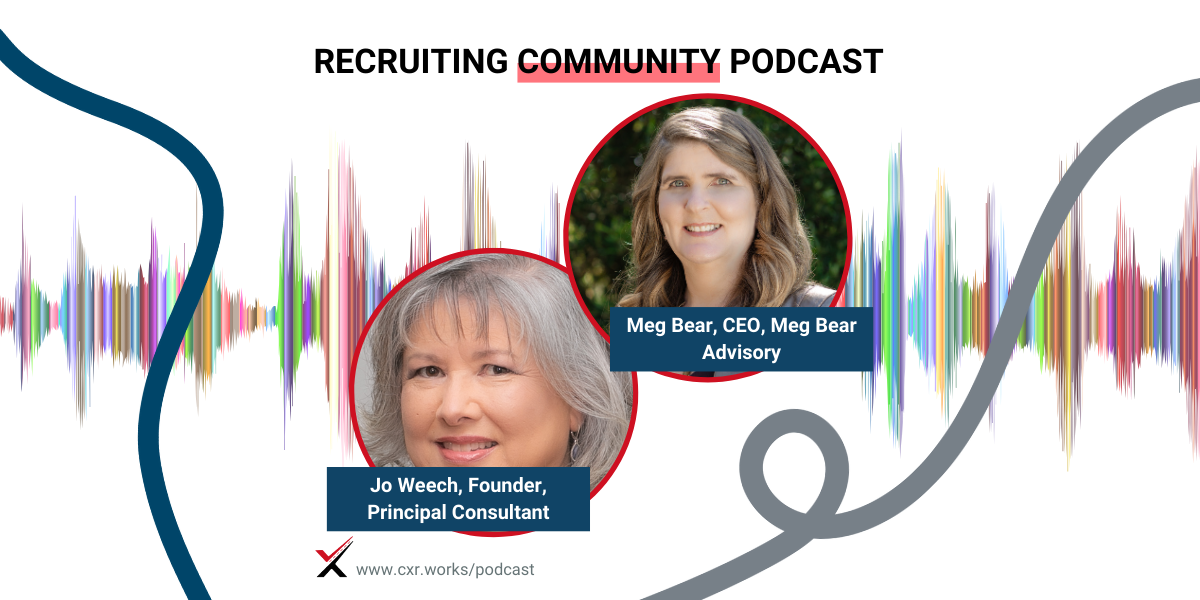
Meg Bear, former President of SAP SuccessFactors; investor and advisor
Jo Weech, Founder and Principal Consultant, Exemplary Consultants Global
Hosts:
Gerry Crispin, Founder, CareerXroads
Episode Overview:
This episode covers a nine-day learning delegation to Vietnam, where a small group of talent professionals explored the intersection of culture, workforce dynamics, and economic development. Gerry Crispin, Meg Bear, and Jo Weech reflect on their immersive experience—meeting with HR leaders, students, academics, and business owners—and share key takeaways from their discussions, site visits, and cultural encounters across Ho Chi Minh City and Hanoi.
Key Topics:
Cultural and economic recovery in post-war Vietnam
Workforce development and generational dynamics in Asia
Structured hiring and ongoing global HR conversations
Government sustainability directives and green initiatives
Accessibility and social impact in Vietnamese business models
Modern infrastructure and technology readiness in Vietnam
Personal reflections on history, resilience, and reconciliation
Notable Quotes:
“What struck me was the overlay of rebuilding a post-war economy, and the cultural dynamics of Asia.” – Meg Bear
“It wasn’t forgiveness, exactly—but an acceptance. They’ve moved on.” – Gerry Crispin
“I got to share one [example] too… during the break, several people came up wanting to learn more.” – Jo Weech
“Vietnam has what’s needed to support professional growth: infrastructure, talent, and cost-effectiveness.” – Meg Bear
Takeaways:
The Vietnam delegation offered rich insights into a rapidly evolving market that challenges outdated assumptions about emerging economies. Participants saw firsthand how cultural values shape education, hiring, and sustainability efforts. From meaningful professional exchanges to personal moments of reflection, the trip highlighted the value of stepping outside one’s comfort zone to engage globally and learn collaboratively.
Want more conversations like this?
Subscribe to the CXR podcast and explore how top talent leaders are shaping the future of recruiting. Learn more about the CareerXroads community at cxr.works.
CXR Podcast: Vietnam Delegation
Announcer: Welcome to the Recruiting Community Podcast, the go-to channel for talent acquisition leaders and practitioners. This show is brought to you by CXR, a trusted community of thousands connecting the best minds in the industry to explore topics like attracting, engaging, and retaining top talent. Hosted by Chris Hoyt and Gerry Crispin. We are thrilled to have you join the conversation.
Gerry Crispin: Welcome! A warm welcome to Meg and Joe. This is a conversation about Vietnam. Right now, we’re in December, closing in on Christmas and the rest of the holidays, but in early November, five of us went to Vietnam. We’ve been doing these delegations to different countries for over 10 years—from Cuba to Eastern Europe, Singapore, Japan, Israel, and in the past, Brazil, China, and India.
The reason I’ve always been involved is to get a little outside our box and better understand how culture impacts hiring and managing people in different countries. I’ve always been surprised by what we’ve learned. This year, it was Vietnam. For me, it was a fascinating nine-day adventure covering two weekends. In the end, there were five of us: Marty Stein, Meg, Joe, and Danny, who couldn’t join us today. Danny is the current Head of Talent Acquisition at Expedia.
To start, I’d love to hear some initial reactions from you, Joe and Meg. Maybe share a bit about yourselves, what brought you to this trip, and a key thought from the experience. Meg, let’s start with you.
Meg Bear: This was my first trip with you all, and I had the most delightful time. I’m Meg Bear, former President of SAP SuccessFactors, now an investor and advisor. I also co-host a podcast with Amy Wilson called The Meg and Amy Show.
I’d previously gone to Cambodia but couldn’t extend that trip to join in Vietnam, so this was high on my list. Getting to go with this group, connect with business leaders, and dive into what’s happening culturally, economically, geographically—and especially in the world of work—was incredibly valuable. I was very open-minded and eager to be part of the process.
Gerry Crispin: That’s great. How about you, Joe?
Jo Weech: I was honored to be invited by Gerry after going on a previous trip to Japan. I’m Jo Weech, founder and principal consultant of Exemplary Consultants Global. I love learning and interacting with people from different countries and understanding work in various places.
What I learned in Japan has stayed with me, so I was really excited to see what I could learn and who I could connect with in Vietnam—and I wasn’t disappointed. The people we met in different sectors were amazing, and getting to know our group on a personal level was a real bonus. I feel like I’ve made friends for life.
Gerry Crispin: I’m Gerry Crispin, founder of CareerXroads. This trip isn’t a formal CXR event—it’s something I personally believe is important in investing in your own learning. It inspires me to think about what others are doing globally that we might learn from.
Going to Vietnam, a communist country, was eye-opening. Ho Chi Minh is revered as the father of the country. I’m old enough to remember the Vietnam War, which deeply impacted my generation. Being there now, meeting the people, and seeing how life operates within that system challenged many assumptions I had about overt control in a communist country. It was more subtle than I expected.
When you think about the experiences we had, we met with professors, students, HR groups… Was there anyone or anything in particular that stood out?
Meg Bear: What stood out was the range. We met with academics, elite entrepreneurs, construction and policy organizations, small business advocates—just a wide spectrum. That helped give us a broader orientation.
One of the things that struck me was the overlay of rebuilding a post-war economy, and the cultural dynamics of Asia—like multi-generational households. We had several discussions about early talent and Gen Z. Some narratives seemed familiar—like “kids today aren’t willing to work”—but there was a lot of nuance.
You realize that we bring our own biases into those conversations, often based on stereotypes. But when you really listen, you see that their challenges and aspirations are quite complex.
Gerry Crispin: That’s a great point. At the University of Labor and Social Affairs, I noticed their syllabi used terms like “fair compensation,” not just “compensation.” That framing was powerful—it reflected values embedded in their teaching.
Meg Bear: And Ho Chi Minh was in every room!
Gerry Crispin: Yes, always present in the background. Joe, anything in particular stand out to you?
Jo Weech: I really enjoyed the conference on going green and AI. At first, the green topic was a bit puzzling, but it became a great exchange of ideas. Danny shared examples from companies she worked with, and I got to share one too.
I also spoke briefly about structured hiring, and during the break, several people came up wanting to learn more. We connected on LinkedIn and continued the conversation. That ongoing connection is invaluable.
Gerry Crispin: If I remember correctly, that was in Hanoi, and there’s a government directive to convert 6 million gas-powered motorcycles to electric—quickly.
Meg Bear: Yes, I think it’s by next year! We were all wondering how realistic that is.
Gerry Crispin: It was a big group—about 40 HR leaders—organized by a consulting group focused on sustainability. The government has made it clear: sustainability is critical for 2026.
Meg Bear: It reminded me of executive orders in the U.S. and Europe where mandates go out, but implementation details are fuzzy. Businesses end up having to figure things out as they go.
Gerry Crispin: Right. Let’s not forget the photo moments—people kept pulling me aside for pictures!
Meg Bear: There was even a moment where they pulled you out of the elevator for more photos. Celebrity status!
Gerry Crispin: The hat and beard, I think, caught their attention.
Let’s shift to the non-professional side—what stood out for you from the cultural or sightseeing experiences?
Meg Bear: It’s hard to separate the fun from the developmental. The Mekong Delta was a highlight. You have a mental image, but being there, going through museums, and understanding the impact of war—especially from the Vietnamese perspective—was powerful.
There’s a real sense of resilience and pride in how far they’ve come. They’ve done a massive amount of rebuilding, economically and socially.
Gerry Crispin: Yes. At the War Remnants Museum, it was sobering to see the long-term effects of Agent Orange—70% of the country was sprayed. Tens of thousands were impacted, including Americans.
And yet, what really struck me was how welcoming the Vietnamese people were. It wasn’t forgiveness, exactly—but an acceptance. They’ve moved on. That mindset is rare, especially compared to other parts of the world where resentment lingers for generations.
Jo Weech: It was personal for me. I grew up in Japan during the war, and my mom would bake Toll House cookies for wounded U.S. soldiers flown to hospitals there. I saw firsthand how war affects individuals. Going to Vietnam gave me deeper context.
Gerry Crispin: The cities were surprisingly modern and full of energy. People were working hard, and the infrastructure was solid—great restaurants, reliable Wi-Fi. Even the tech company Paradox had an impressive office there.
Meg Bear: Yes, Vietnam has what’s needed to support professional growth: infrastructure, talent, and cost-effectiveness. Transportation was a bit different—lots of motorbikes, less public transport—but Grab (the regional Uber) worked well.
Jo Weech: And the food! I ate Vietnamese cuisine for every meal—so fresh and flavorful. And that restaurant staffed entirely by people who are deaf? Amazing. The menu was designed so you could point and order, which was brilliant.
Meg Bear: The social consciousness among business owners stood out. So many were committed to giving back, mentoring others, and hiring inclusively. It was inspiring.
Gerry Crispin: Any key takeaways?
Meg Bear: I think we need to update our assumptions about “emerging markets.” Vietnam—and similar countries—are more developed, capable, and ready than we often think. It’s time to revisit our mental models and appreciate how much these places have evolved over the last 20 years.
Gerry Crispin: For companies considering an Asia hub, Vietnam could be a strong alternative to Singapore. It’s less expensive, but still globally connected and full of talent.
Jo Weech: And the bond within our delegation was meaningful. We looked out for one another—even saving lives! (Thanks again, Meg.)
Gerry Crispin: Yes, the peanut incident… I’m severely allergic, and despite being assured a dish had no peanuts, some of you double-checked. Turns out, it did. So, thank you for keeping me safe.
Meg Bear: Absolutely. That could’ve been really dangerous.
Gerry Crispin: Last question—if you could pick the next delegation location, where would it be?
Meg Bear: I’d say the Middle East. With the rise of AI, the region’s investment capacity and energy resources make it a prime player. It’d be great to explore how they’re evolving in tech and workforce development.
Jo Weech: I agree. I spent time in Dubai recruiting for EMEA, and the innovation there is impressive. They have a tech hub dubbed the “Silicon Valley of Dubai.” I’d love to visit and learn more.
Gerry Crispin: Gender and identity issues would also be important to explore in that region—how companies are navigating them.
Meg Bear: Exactly. There’s a lot we assume, and this would be a great opportunity to unlearn and relearn.
Gerry Crispin: Thank you both. It was a pleasure traveling and learning with you. And a shout-out to Danny and Marty—we missed having you here today. Also, thanks to Nanda Journeys for handling logistics so seamlessly. From transportation to translators, they made everything run smoothly.
Jo Weech: And thanks to Meg, I brought back some gourmet coffee for my son’s Vietnamese landlords. They were thrilled!
Announcer: Thanks for listening to the Recruiting Community Podcast, where talent acquisition leaders connect, learn, and grow together. Visit cxr.works/podcast to explore past episodes, see what’s coming up next, and find out how you can join the conversation. Whether you’ve got insights to share or want to be a guest, we’d love to hear from you. Learn more about becoming a member of the CXR community at www.cxr.works
. We’ll catch you in the next episode.
How do you scale talent acquisition across 90,000 employees? Danone’s Koos Wurzer shares how TA Week drives global engagement—and why candidate experience starts with hiring managers.